


- Knowledge is power
- The Future Of Possible
- Hibs and Ross County fans on final
- Tip of the day: That man again
- Hibs and Ross County fans on final
- Spieth in danger of missing cut
An Ephesus tour is one of the most exciting ways to explore the remains of one of the greatest cities of the ancient world. Located in modern-day Turkey, Ephesus was a major cultural, religious, and commercial center during the Greek and Roman periods. Today, visitors can walk through its well-preserved streets, admire its grand structures, and immerse themselves in the history of an ancient civilization.
A professional Ephesus tour provides valuable insights into the significance of each site, ensuring you get the most out of your visit. A knowledgeable guide will bring history to life, explaining the legends, architecture, and cultural importance of this fascinating city. Here’s what you can expect to see on a well-planned Ephesus tour.
The Magnesia Gate (Upper Gate)
Most Ephesus tours begin at the Magnesia Gate, also known as the Upper Gate. This entrance was once an important access point to the city, welcoming traders, politicians, and religious figures. Today, it serves as the main starting point for visitors, allowing them to explore Ephesus in a logical sequence, moving downhill through the ruins.
The Odeon
One of the first stops on an Ephesus tour is the Odeon, a small yet well-preserved theater that once hosted political meetings and cultural performances. Built in the 2nd century AD, this semi-circular structure could hold around 1,500 spectators. The Odeon was used for concerts, theater performances, and meetings of the city council, showcasing Ephesus’ role as a political and cultural hub.
The Prytaneion
Next, your Ephesus tour will take you to the Prytaneion, which functioned as the city’s administrative center. This was where official ceremonies and banquets took place, and it also housed the sacred fire of Hestia, which was kept burning at all times as a symbol of the city’s eternal life.
Curetes Street
Walking along Curetes Street is one of the most memorable parts of an Ephesus tour. This main street connected key landmarks, including temples, fountains, and statues. It was lined with columns and shops, making it a vibrant part of the city where citizens gathered for daily activities. The street was named after the Curetes, semi-mythological priests of Artemis.
The Temple of Hadrian
A significant stop on any Ephesus tour is the Temple of Hadrian, one of the best-preserved structures in the city. Built in the 2nd century AD, the temple was dedicated to Emperor Hadrian, who visited Ephesus during his reign. The temple’s intricate reliefs depict the founding myth of Ephesus, making it an important site for those interested in both history and mythology.
The Terrace Houses
For those interested in learning about daily life in ancient Ephesus, the Terrace Houses are a must-see. Located along Curetes Street, these homes belonged to the city’s wealthy elite. Featuring stunning frescoes, mosaics, and even an advanced heating system, these houses give insight into the luxurious lifestyle of Roman aristocrats. Although they require an additional entrance fee, they are one of the most rewarding stops on an Ephesus tour.
The Celsus Library
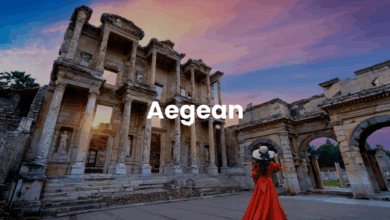
No Ephesus tour is complete without a visit to the Celsus Library, one of the most famous landmarks of the ancient world. Built in 135 AD, this magnificent library once housed over 12,000 scrolls, making it the third-largest library of the Roman Empire. The facade of the library is a masterpiece of Roman architecture, featuring intricate carvings and statues representing wisdom, knowledge, intelligence, and virtue.
The Agora
Your Ephesus tour will continue to the Agora, the city’s commercial and trading center. Merchants from across the Mediterranean gathered here to buy and sell goods, making it one of the busiest areas in Ephesus. The marketplace was surrounded by colonnades and featured various shops, contributing to the city’s economic power.
The Great Theater
One of the most breathtaking stops on an Ephesus tour is the Great Theater, a massive amphitheater that could hold up to 25,000 people. Originally built in the Hellenistic period and expanded by the Romans, it was used for theatrical performances, gladiator fights, and public gatherings. It is also famously mentioned in the Bible as the place where St. Paul preached to the Ephesians. Standing in the theater today, visitors can truly feel the scale and grandeur of this ancient entertainment venue.
The Arcadian Way
The Arcadian Way, also known as the Harbor Street, was one of the grandest roads in Ephesus. Lined with columns and illuminated by street lamps at night, it connected the city’s main areas to its once-thriving port. Although the harbor has long since silted up, walking along this road is a fascinating way to end an Ephesus tour.
The House of Virgin Mary
Many Ephesus tours also include a visit to the House of Virgin Mary, located on Mount Koressos just a few kilometers from the ancient city. According to Christian tradition, the Virgin Mary spent her final years here under the care of St. John. Recognized as a holy site by both Christians and Muslims, the house attracts thousands of pilgrims each year. Visitors can explore the small chapel, drink from the sacred spring, and tie wishes to the famous wishing wall.
The Temple of Artemis
Another important stop on an Ephesus tour is the site of the Temple of Artemis, one of the Seven Wonders of the Ancient World. Although only a few columns remain today, it was once one of the most magnificent temples of the ancient world, dedicated to the goddess Artemis. The temple was a center of worship and pilgrimage for centuries before its destruction.
Why Choose a Professional Guided Ephesus Tour?
While it is possible to explore Ephesus on your own, joining a professional Ephesus tour enhances the experience significantly.
A professional guide provides historical context, explaining the significance of each site in detail. Ephesus has a rich and complex history, and without a knowledgeable guide, many visitors miss out on important details and hidden stories.
Guided Ephesus tours also help visitors navigate the vast site efficiently. The ancient city is large, and a tour ensures that you see all the major landmarks without wasting time. Additionally, some areas, such as the Terrace Houses, require additional knowledge to fully appreciate their historical importance.
Finally, a guided Ephesus tour allows visitors to ask questions and gain a deeper understanding of the site’s archaeology, culture, and significance. Whether you are interested in Roman engineering, mythology, or religious history, a professional tour can be tailored to suit your interests.
An Ephesus tour is an unforgettable journey through one of the greatest cities of the ancient world. From the grandeur of the Great Theater to the elegance of the Celsus Library, every corner of Ephesus tells a story of power, culture, and innovation. Whether you are a history enthusiast, a religious traveler, or simply a curious explorer, an Ephesus tour offers a unique opportunity to walk in the footsteps of ancient civilizations and experience history firsthand.



Hi, this is a comment.
To get started with moderating, editing, and deleting comments, please visit the Comments screen in the dashboard.