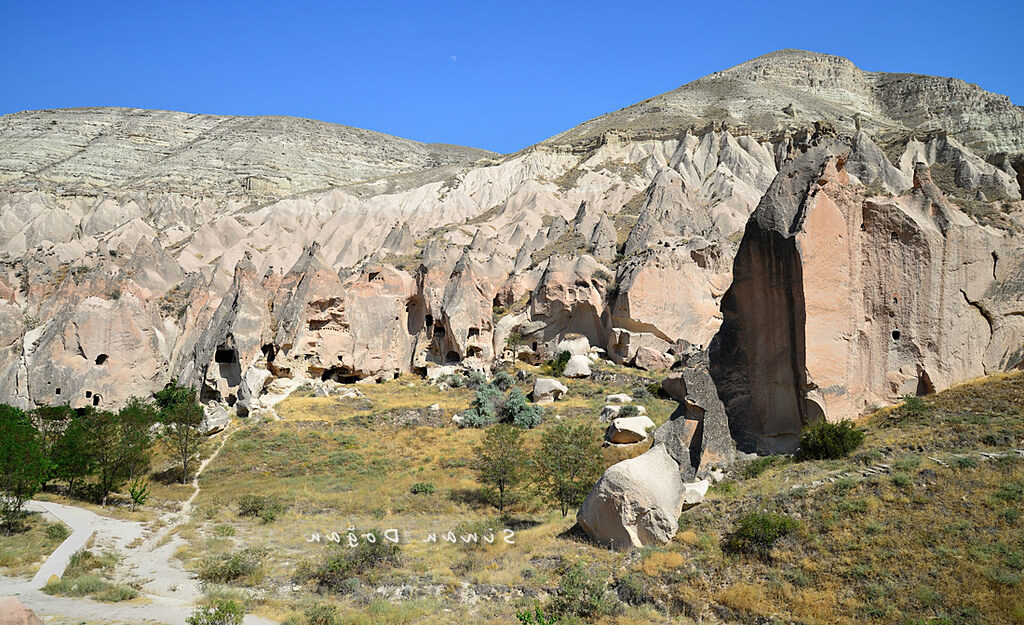


Zelve Valley and Open-Air Museum are among the must-visit destinations in Cappadocia. Known as one of the oldest and most extensively used settlement areas in the region, Zelve captivates visitors with its rich history and breathtaking landscapes. Comprising three interlinked valleys, the site houses a variety of churches, monasteries, and ancient dwellings, all carved into the iconic volcanic rock formations.
While we are talking about Zelve Valley and Open-Air Museum: The valley was one of the first areas where Christianity began to spread, making it a vital historical and religious site. Over time, Zelve transitioned into a thriving village, a period marked by the presence of a mosque, which still stands today, located directly across from a monastery. Zelve Valley also boasts the highest concentration of fairy chimneys in the Cappadocia region.
This archaeological treasure is filled with tunnels, although some sections have been closed due to collapses over the years. Visitors will also notice pigeon houses etched along the cliffs, a striking feature that adds to the valley’s charm. These pigeon houses were historically used for collecting guano, a valuable fertilizer for the local vineyards.
Zelve Valley is not just a historical site; it’s a cultural hub. The valley occasionally hosts concerts and events, blending its natural acoustics with a magical atmosphere. For those planning an extended stay, MDC Hotel offers excellent accommodation and access to such unique experiences.
Zelve Open-Air Museum
The Valley and Zelve Open-Air Museum is a standout attraction in Cappadocia. Renowned for its sharp, pointed fairy chimneys and wide-based rock formations, the museum offers a glimpse into the rich history and artistry of the region. The caves and dwellings within the museum feature intricate animal and human carvings, as well as numerous frescoes that have stood the test of time.
The museum includes not only a collection of ancient dwellings but also a mosque and a series of significant churches. The artistry of the carvings and frescoes found in these churches, as well as the craftsmanship of the dwellings, exemplify the skill and creativity of the region’s early inhabitants. Notable structures within the museum include the Balıklı (Fish) Church, Üzümlü (Grape) Church, and Geyikli (Deer) Church.
The Zelve Valley
Zelve Valley’s historical significance extends beyond its religious heritage. For centuries, it served as a hub for agricultural innovation and community living. The pigeon houses, an integral part of the valley’s ecosystem, were meticulously maintained to support the local agricultural practices, primarily grape cultivation. These rock-carved shelters for pigeons underline the resourcefulness of the region’s inhabitants.
In addition to its agricultural and residential functions, Zelve played a crucial role during the early spread of Christianity, with its caves and tunnels offering refuge and protection to believers. The valley’s harmonious blend of natural beauty, history, and cultural legacy makes it a microcosm of Cappadocia’s broader appeal.
Visitors to Zelve can embark on hiking trails that wind through its three valleys, offering breathtaking views and the chance to explore ancient rock-cut dwellings and churches. Guided tours provide rich insights into the valley’s history, while events and concerts held within the valley create a unique cultural experience against the backdrop of its surreal landscape.
The Zelve Valley and Open-Air Museum represent the perfect marriage of natural wonder and human ingenuity, making it an essential stop for anyone exploring the wonders of Cappadocia.
Balıklı and Üzümlü Church
The Balıklı and Üzümlü Church is located in the third valley of Zelve. These churches, part of a larger monastic complex, date back to the 10th century. Though the entrance areas of the church have suffered damage over time, their remaining features are stunning. Visitors are greeted by a depiction of the Virgin Mary holding baby Jesus at the entrance, with archangels Michael and Gabriel depicted holding crosses nearby. Inside, the apse contains an intricate framed portrayal of Jesus, surrounded by other religious motifs.
Geyikli Church
The Geyikli Church stands out with its unique carvings of deer and prominent cross motifs on its walls. Belonging to the Iconoclastic period, this church is considered one of the most significant in the Zelve Valley. Its artistry reflects a blend of religious symbolism and the natural beauty of the surrounding landscape.